
Estate Planning in Georgia: Three Essential Documents Every Adult Should Have
Many people think estate planning is something to handle later. In reality, having a few key documents in place can make a significant difference for you and your family, especially during unexpected situations.
Estate planning in Georgia is not only about what happens after death. It also ensures that the right people can step in to make financial and medical decisions if you are unable to do so.
This guide explains the three essential estate planning documents every adult in Georgia should have and why they matter.
What Happens If You Do Not Have an Estate Plan in Georgia
If you do not have basic estate planning documents in place, Georgia law determines what happens next.
This can mean:
Your assets are distributed according to state law, regardless of your preferences
The court appoints someone to manage your finances or make decisions for you
Your family may need to go through probate, conservatorship, or guardianship proceedings
These processes can be time-consuming, public, and stressful for loved ones.
Creating a clear estate plan allows you to maintain control and reduce uncertainty.
1. Last Will and Testament in Georgia
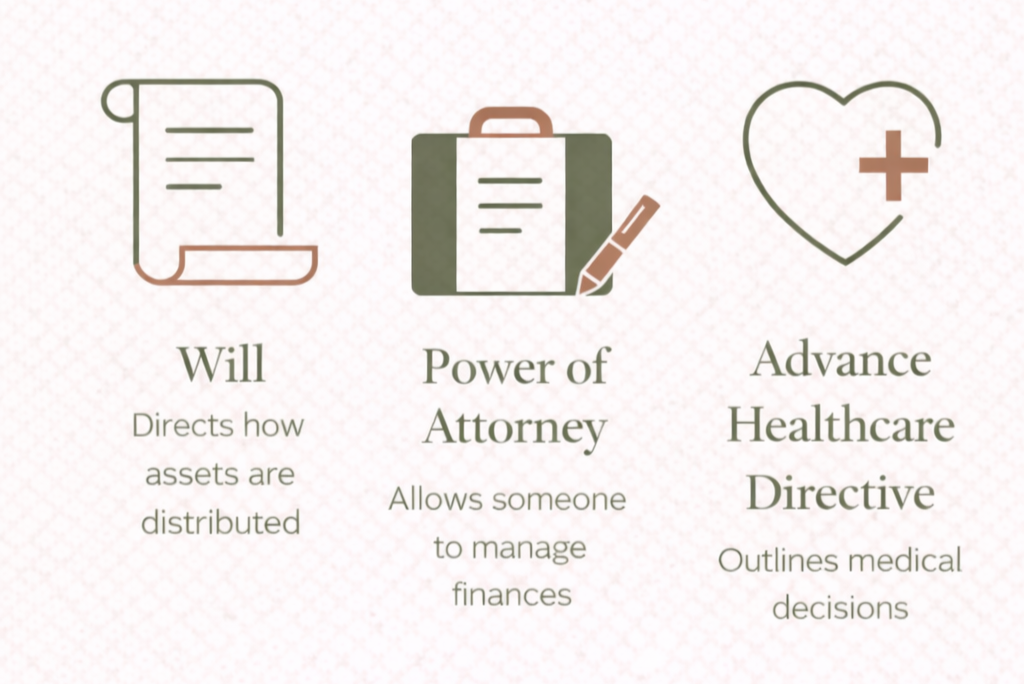
A Last Will and Testament allows you to decide how your assets are distributed and who will carry out your wishes.
Without a Will, your estate is considered intestate under Georgia law. This means the state determines:
Who inherits your property
Who administers your estate
Who may serve as guardian for minor children
A properly prepared Will allows you to:
Name a trusted executor
Direct how your assets are distributed
Provide for children or loved ones with specific needs
Include trust provisions when appropriate
A Will should be properly signed and witnessed under Georgia law to be valid.
2. Durable Financial Power of Attorney in Georgia
A Durable Financial Power of Attorney allows you to appoint someone to manage your financial and legal affairs if you become unable to do so.
This may include:
Accessing bank accounts
Managing investments
Handling real estate transactions
Continuing business operations
Without this document, your family may need to seek a conservatorship through the probate court.
Conservatorship can involve:
Court supervision
Ongoing reporting requirements
Additional time and expense
A well-drafted Power of Attorney helps keep decision-making within your chosen circle and can reduce the need for court involvement.
3. Advance Directive for Health Care in Georgia
An Advance Directive for Health Care allows you to appoint someone to make medical decisions on your behalf if you cannot communicate your wishes.
This includes decisions about:
Medical treatment
Long-term care
End-of-life care
Without clear direction, families often face uncertainty during already difficult moments.
An Advance Directive can help:
Ensure your preferences are followed
Reduce confusion among family members
Avoid guardianship proceedings in many cases
It is also important to address medical privacy laws, including HIPAA, so your chosen person can access necessary information.
Frequently Asked Questions About Estate Planning in Georgia
Do I need a Will if I do not have many assets?
Yes. A Will is not only about assets. It also allows you to name decision-makers and provide direction for your estate.
Can I create a Power of Attorney without a lawyer?
Basic forms are available, but they may not be accepted by financial institutions or tailored to your situation. A properly drafted document is often more effective.
What is the difference between guardianship and conservatorship?
Guardianship relates to personal and medical decisions. Conservatorship relates to financial decisions. Both involve court oversight.
When should I update my estate plan?
You should review your plan after major life events such as marriage, divorce, the birth of a child, or significant financial changes.
Final Thoughts
Estate planning in Georgia does not need to be overwhelming. Starting with these three essential documents can create a strong foundation and help ensure that your wishes are carried out.
