
Special Needs Trusts in Georgia: What Families Need to Know
Planning for a loved one with special needs often comes with important and sometimes overwhelming questions. How do you provide financial support while protecting access to essential benefits? What happens if something unexpected occurs?
A Special Needs Trust is one of the most effective tools available to help families navigate these concerns with clarity and intention. When structured properly, it allows you to provide meaningful, long-term support without putting important benefits at risk.

“A Special Needs Trust allows you to provide meaningful support without putting essential benefits at risk”
What Is a Special Needs Trust?
A Special Needs Trust is a legal arrangement designed to hold and manage assets for the benefit of an individual with a disability.
The key feature is this: the assets in the trust are not considered the individual’s personal resources for purposes of eligibility for certain government benefits, such as Supplemental Security Income (SSI) and Medicaid.
Instead, a trustee manages the funds and uses them to supplement, not replace, those benefits.

Why a Special Needs Trust Matters
Many individuals with disabilities rely on needs-based programs like SSI and Medicaid, which have strict limits on income and assets. Receiving money directly, even with the best intentions, can unintentionally disqualify someone from those benefits.
A Special Needs Trust helps avoid that outcome while still allowing funds to be used for things that improve quality of life, such as:
Additional medical care or therapies
Education and training
Transportation
Personal care assistance
Technology and communication tools
Recreational and social activities
This type of planning creates flexibility while preserving stability.
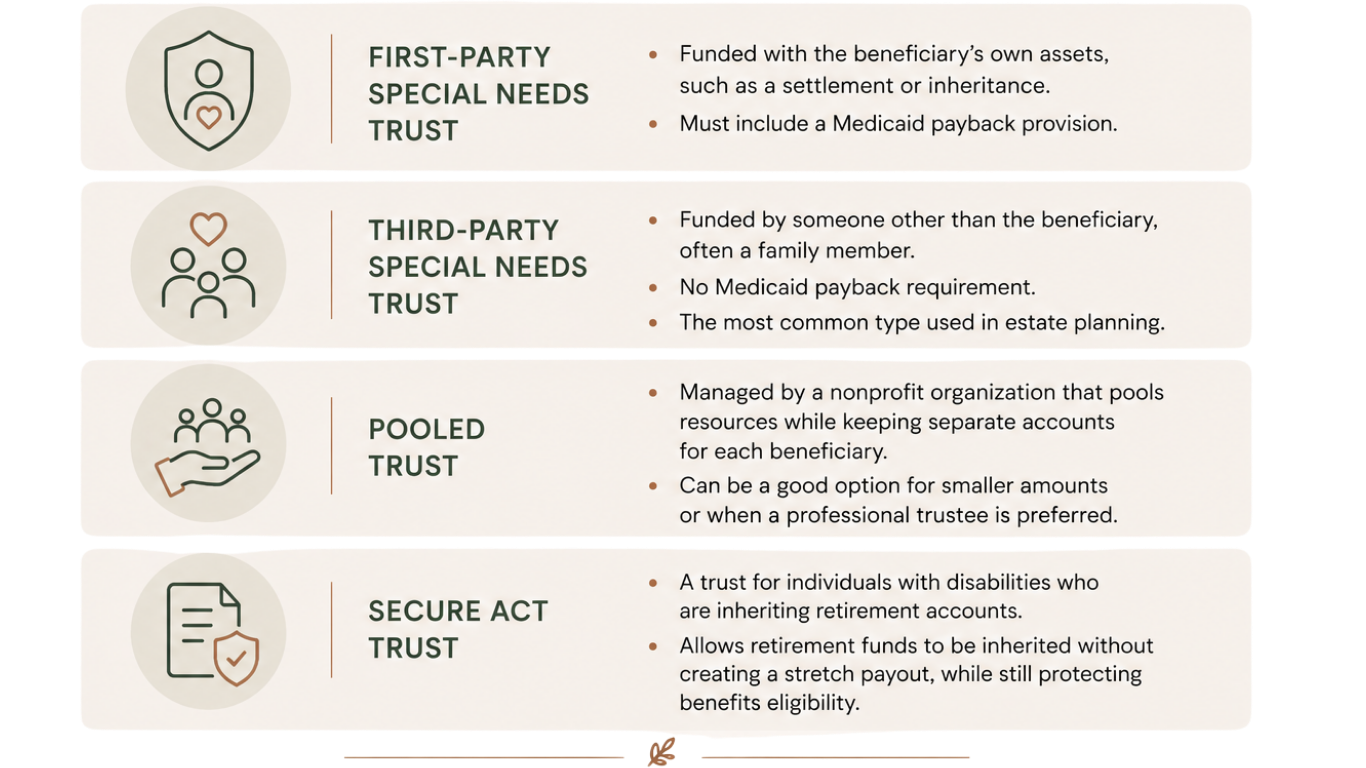
Types of Special Needs Trusts
Common Mistakes to Avoid
Even well-intentioned decisions can create complications if the planning is not coordinated properly. Some of the most common issues include:
Leaving assets outright to a beneficiary with special needs
Naming the individual directly on retirement accounts or life insurance policies
Using the wrong type of trust for the situation
Waiting too long to put a plan in place
Taking the time to structure things correctly can help avoid unnecessary stress later.
How the Process Works
Creating a Special Needs Trust is a collaborative process designed to reflect your family’s specific needs and goals.
At Conner Law Group, that process typically includes:
An initial conversation to understand your priorities
A design meeting to map out the structure and details
Drafting and review of the trust documents
A final signing to put the plan in place
Each step is intended to feel clear, manageable, and tailored to your situation.
Final Thoughts
Every family’s situation is different, and there is no one-size-fits-all approach. The right plan is one that balances protection, flexibility, and long-term support.
If you are considering a Special Needs Trust or want to better understand your options, having a thoughtful conversation early on can make all the difference.
