
Special Needs Planning Is More Than a Trust: 7 Pieces of a Coordinated Plan
Special needs planning is sometimes reduced to one question:
“Do we need a Special Needs Trust?”
A Special Needs Trust can be an important part of the answer.
But it is rarely the entire answer.
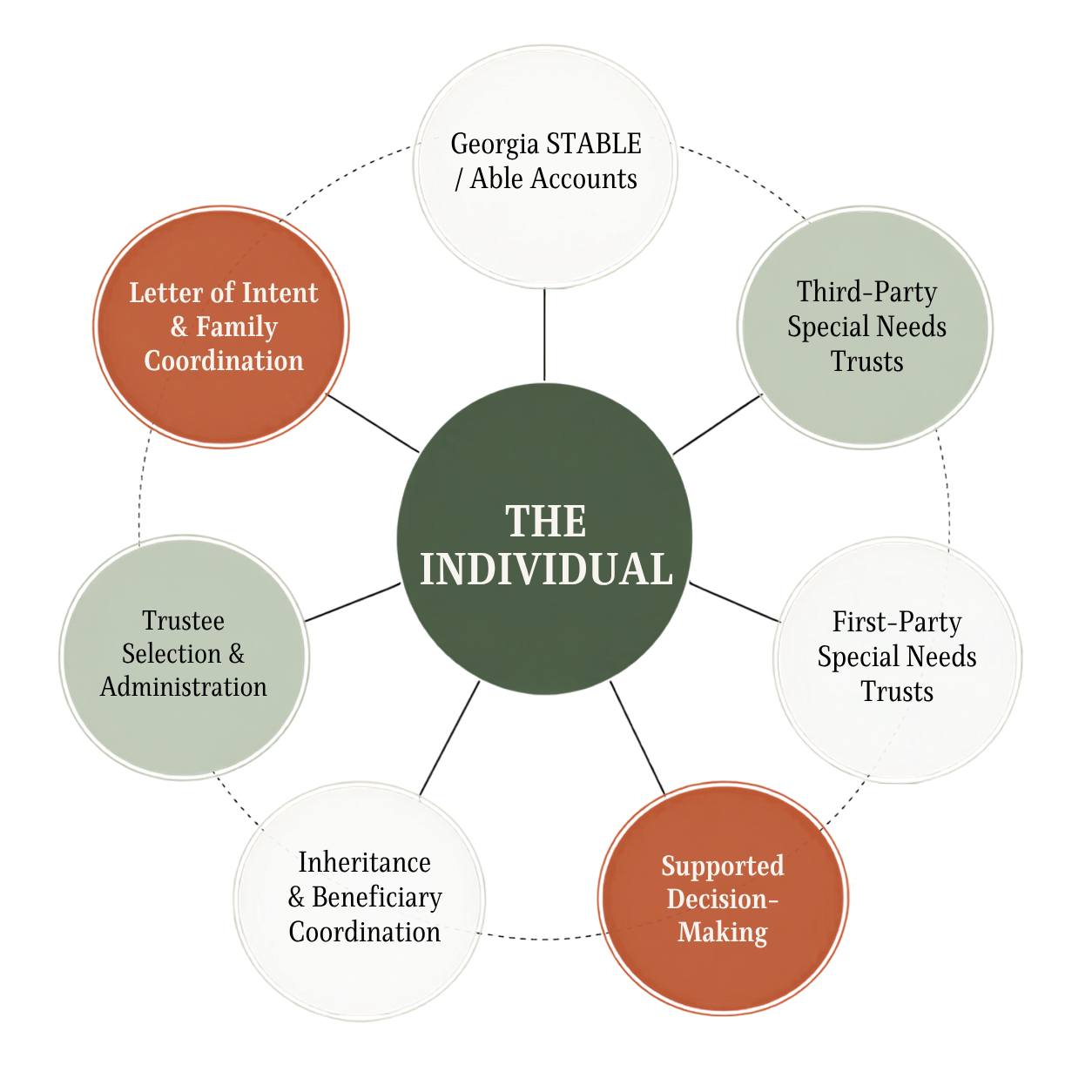
A strong plan considers not only where money will go, but also who will manage it, how the individual will participate in decisions, how family members will coordinate, and whether beneficiary designations and other assets actually work with the plan.
Key Takeaway: Good special needs planning is not one document. It is a coordinated system designed around the individual.
1. The Special Needs Trust: Long-Term Protection
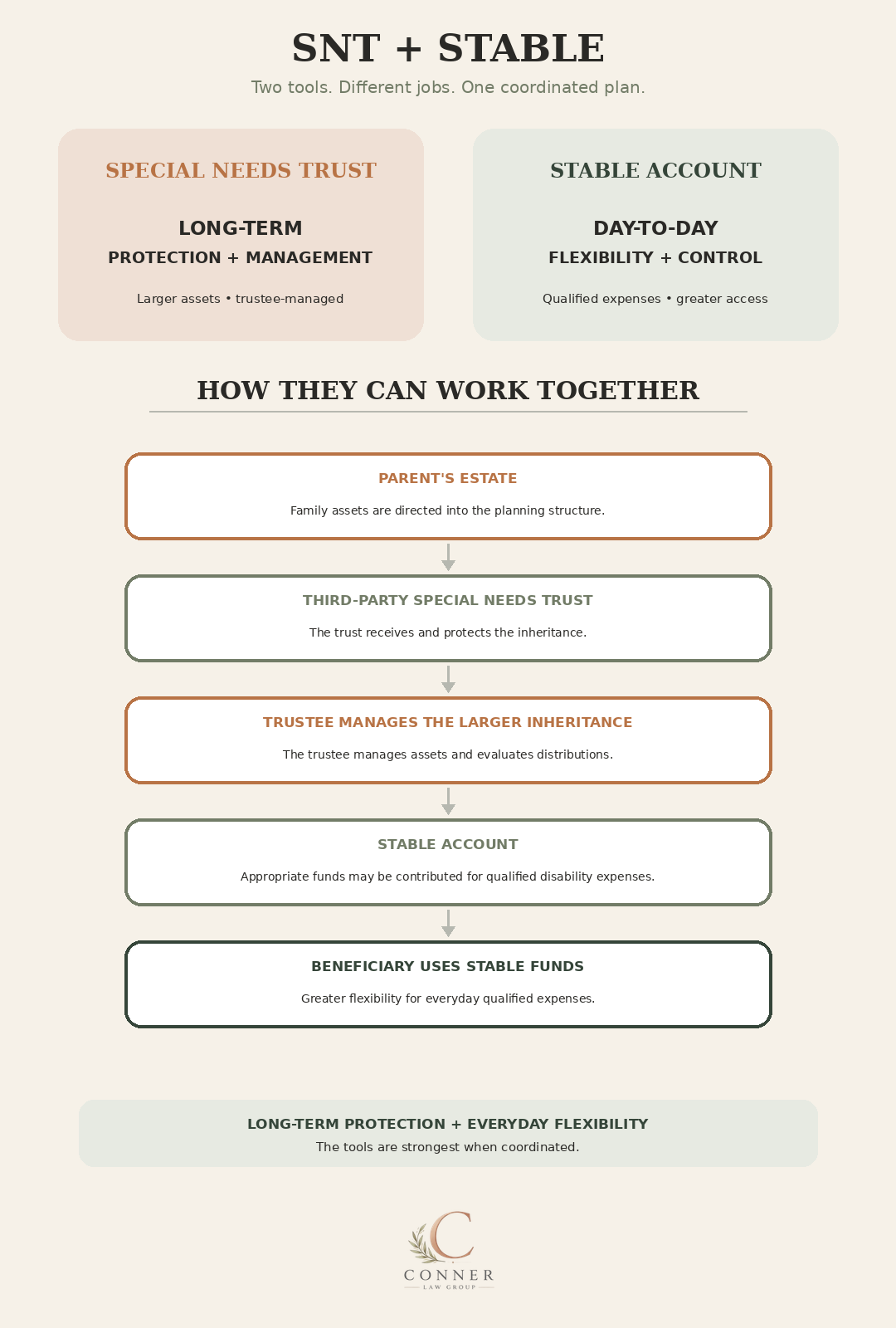
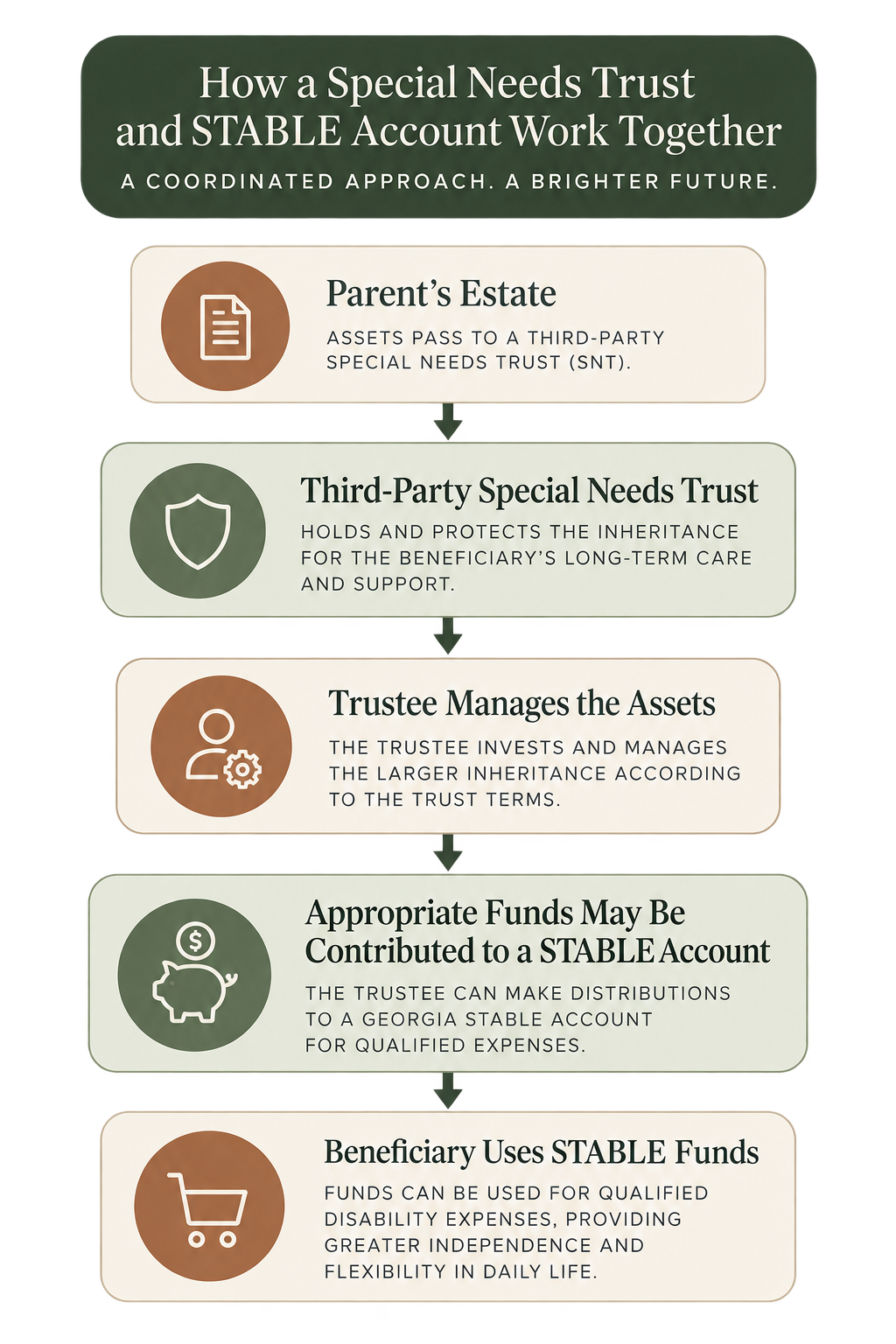
A Special Needs Trust, or SNT, can hold and manage assets for a person with a disability while helping preserve eligibility for certain means-tested government benefits.
For parents and grandparents planning ahead, a third-party Special Needs Trust may be used to receive:
Inheritances
Life insurance
Investment accounts
Property
Other family assets
Instead of leaving those assets directly to the individual, they can pass to the trust and be managed by a trustee.
The trust can provide long-term financial protection.
But someone still has to administer it well.
And the beneficiary still needs a practical way to live, make decisions, and use resources.
That is why the trust is the foundation of the financial plan, not the entire plan.

2. The STABLE Account: Greater Day-to-Day Flexibility
A Georgia STABLE account is Georgia's version of an ABLE account.
For an eligible individual, a STABLE account can provide a tax-advantaged way to save for Qualified Disability Expenses while receiving special treatment under means-tested benefit programs such as SSI and Medicaid, subject to applicable program rules and account limits.
3. Supported Decision-Making: Planning for Independence, Too
Financial planning should not automatically become a plan for someone else to make every decision.
Supported Decision-Making is an approach in which an individual makes his or her own decisions with assistance from trusted supporters.
Support might include helping the individual:
Understand information;
Compare options;
Ask questions;
Communicate with professionals;
Think through consequences; or
Express a decision.
The critical distinction is that the supporter assists with the decision. The supporter does not simply make the decision for the individual.
In Georgia, organizations including I DECIDE Georgia and the Georgia Advocacy Office promote Supported Decision-Making as a way to preserve autonomy and, when appropriate, as a less restrictive alternative to guardianship.
Depending on the individual's needs and abilities, the broader legal plan may also include documents such as a Power of Attorney, Advance Directive for Health Care, releases permitting access to information, or, when necessary, guardianship or conservatorship.
The goal should be to use the appropriate amount of support without unnecessarily removing independence.
4. The Letter of Intent: The Information the Legal Documents Cannot Capture
A trust might say who manages the money.
A Letter of Intent can explain how the person actually lives.
A Letter of Intent is generally not a substitute for a Will, Trust, Power of Attorney, or other legal document. Instead, it serves as a practical guide for future caregivers, trustees, family members, and supporters.
It might include information about:
Daily routines
Physicians and therapists
Medications
Communication preferences
Food preferences
Sensory needs
Employment or day programs
Transportation
Friends and community connections
Religious practices
Behavioral supports
Things that cause anxiety
Things that bring comfort
Long-term hopes and goals
Consider the difference:
Trust:
The trustee may pay for recreational activities.
Letter of Intent:
She loves Braves games, dislikes crowded indoor concerts, and has attended the same summer camp for eight years.
Both pieces of information matter.
A well-designed plan should preserve more than benefits. It should help preserve the person's routines, relationships, preferences, and quality of life.
5. Inheritance and Beneficiary Coordination: Make Sure the Money Goes to the Right Place
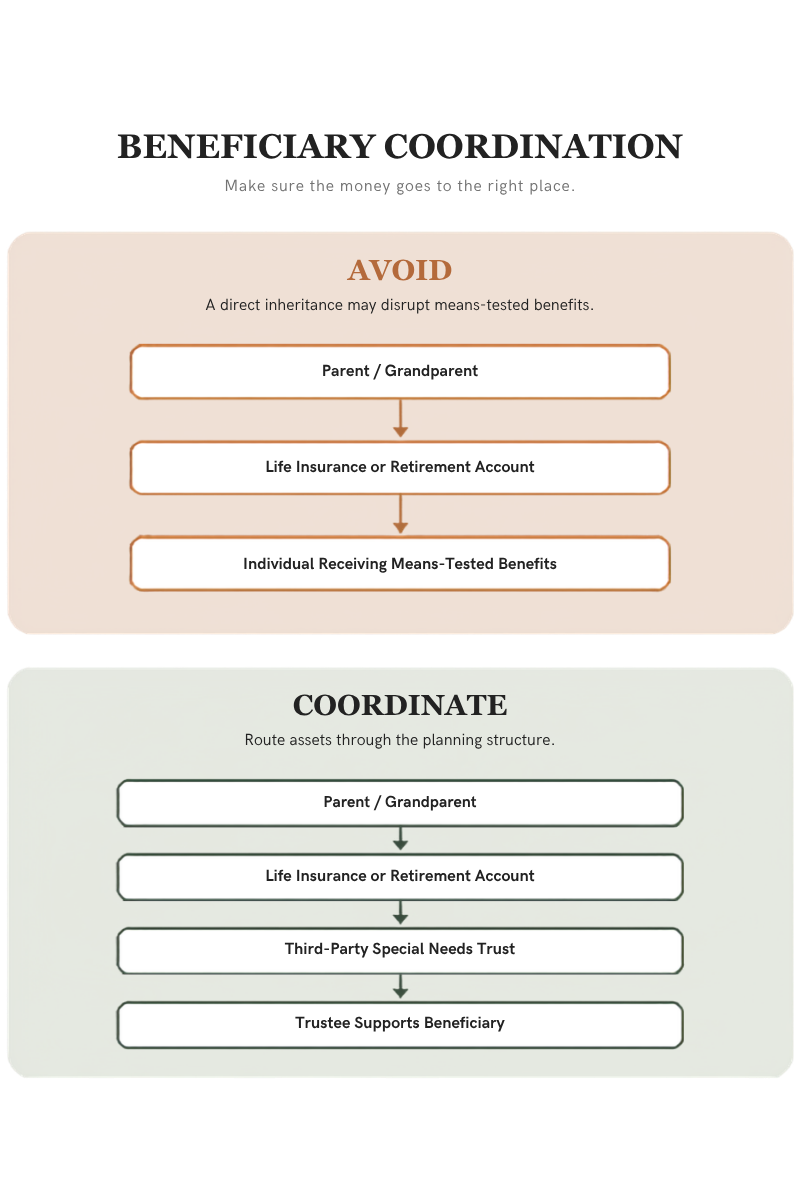
One of the easiest ways to undermine an otherwise carefully drafted Special Needs Trust is through an incorrect beneficiary designation.
Suppose parents create a Special Needs Trust for their son.
Their Wills and Revocable Trusts are drafted correctly.
But their $500,000 life insurance policy still lists:
Beneficiary: Son
The insurance company generally follows the beneficiary designation on the policy.
That means the proceeds may never reach the Special Needs Trust.
The same issue can arise with:
Life insurance
Retirement accounts
IRAs
Brokerage accounts
Transfer-on-death accounts
Payable-on-death accounts
Certain annuities
Family members' estate plans
This is why special needs planning should include a beneficiary designation review, not simply document preparation.
6. Trustee Selection: Choose a Person Who Can Actually Do the Job
Families understandably focus on who they trust.
But selecting a trustee requires another question:
Who can actually administer this trust for years or decades?
A Special Needs Trustee may need to:
Manage investments;
Maintain records;
File tax returns;
Understand the trust document;
Evaluate distribution requests;
Understand public-benefit rules;
Coordinate with caregivers;
Work with financial and legal professionals; and
Balance the beneficiary's current needs with long-term financial sustainability.
The person who loves the beneficiary most is not automatically the best trustee.
Some families choose:
A family member
Someone who knows the beneficiary personally.
A professional trustee
Someone with fiduciary and administrative experience.
A combination of professional management and family involvement
Allowing different people to contribute different strengths.
There is no universally correct answer.
The right choice depends on the assets, family relationships, complexity of the beneficiary's needs, and anticipated duration of the trust.
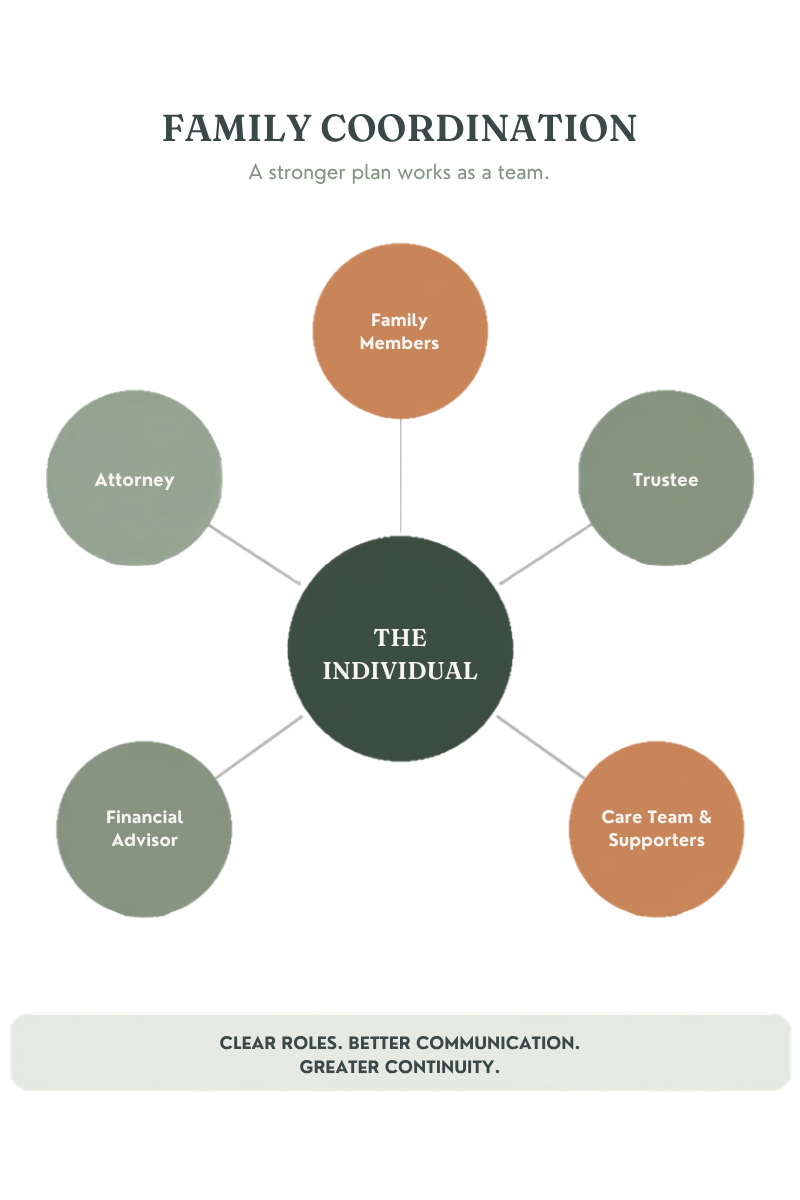
7. Family Coordination: Everyone Should Understand the Plan
A technically perfect plan can still fail if nobody knows how it is supposed to work.
Parents may understand the Special Needs Trust.
But does the grandparent?
Does the sibling who may someday become trustee?
Does the aunt who has named the individual in her Will?
Does the successor caregiver know where the Letter of Intent is located?
Does anyone know who should be contacted if a parent suddenly becomes incapacitated?
Good planning creates a team, not a collection of disconnected documents.
How the Pieces Fit Together
The strongest special needs plans coordinate each piece around the person.
Financial Protection
Special Needs Trust
Protects and manages long-term assets.
↓
Spending Flexibility
STABLE Account
Provides greater flexibility for qualified expenses.
↓
Independence
Supported Decision-Making
Helps the individual understand options and make decisions with appropriate support.
↓
Practical Guidance
Letter of Intent
Preserves information about routines, preferences, needs, relationships, and goals.
↓
Asset Coordination
Beneficiary Review
Makes sure inheritances, insurance, and financial accounts actually reach the intended planning structure.
↓
Long-Term Administration
Trustee Selection
Identifies who will responsibly manage the plan.
↓
Continuity
Family Coordination
Makes sure the people who may need to step in understand what exists and what they are supposed to do.
Start With the Person, Not the Documents
Special needs planning involves legal documents, financial accounts, public benefits, and tax considerations.
But those are tools.
The plan should begin with the individual.
What does independence look like for them?
What support do they need?
Who do they trust?
What routines and relationships matter?
What financial resources are available?
And what needs to be in place if the people providing support today are no longer able to do it tomorrow?
Those questions help determine which planning tools make sense.
The objective is not simply to create a Special Needs Trust.
It is to create a plan that works together.
Building a Coordinated Special Needs Plan in Georgia
At Conner Law Group, we help Georgia families evaluate the legal and financial pieces of special needs planning, including Special Needs Trusts, STABLE account coordination, beneficiary planning, trustee selection, decision-making options, and long-term family planning.
If you have a loved one with special needs, we can help you identify the pieces you already have, the gaps that may remain, and how they should work together.
