
The Problem With Being the One Who Knows Everything

Every family has one person who keeps the whole operation moving.
The person who knows the school login, the pediatrician’s portal password, where the insurance policies live, which bill auto-drafts from which account, and why there are three different apps for one child’s soccer schedule.
In many families, that person is a woman.
She may be a mother, daughter, spouse, caregiver, business owner, or some combination of all of the above. She is often the unofficial keeper of the information everyone else depends on but cannot quite locate without sending a text that starts with, “Hey, where is…”
Most days, this just feels like life.
Until something unexpected happens

When Life Hits Pause
Imagine you are suddenly unavailable for a few weeks.
Not permanently. Just long enough that someone else has to step in and run the basics without you.
Would your spouse know how to access important accounts?
Would someone know where your legal documents are stored?
Could a trusted person talk with doctors if needed?
Would anyone know which bills are due, who to call, where the insurance cards are, or how to find the one folder that is absolutely not labeled “important stuff,” even though it should be?
Many families assume these things will work themselves out.
Sometimes they do.
Often, they do not.
When critical information lives mostly in one person’s head, even a temporary illness, accident, or emergency can turn ordinary tasks into a scavenger hunt nobody wanted to play.
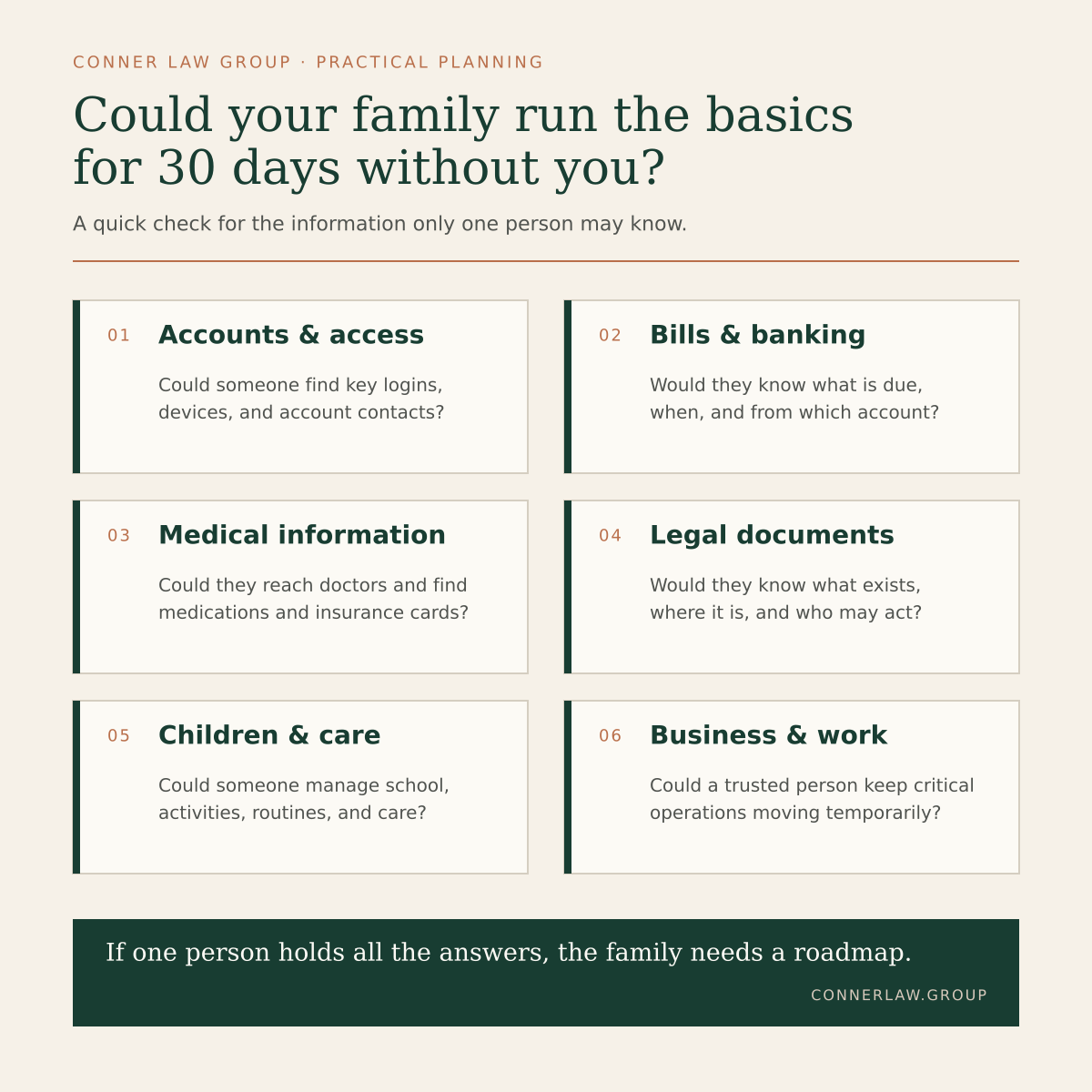
If you were unavailable for 30 days, would your family know how to keep the essentials moving?

Estate Planning Is About More Than What Happens After Death
One of the biggest misconceptions about estate planning is that it only matters after someone dies.
In reality, some of the most important planning protects you and your family while you are still very much alive.
A durable financial power of attorney allows someone you trust to help manage financial matters if you cannot. An advance directive for healthcare allows someone to make medical decisions and communicate with doctors if you are unable to speak for yourself.
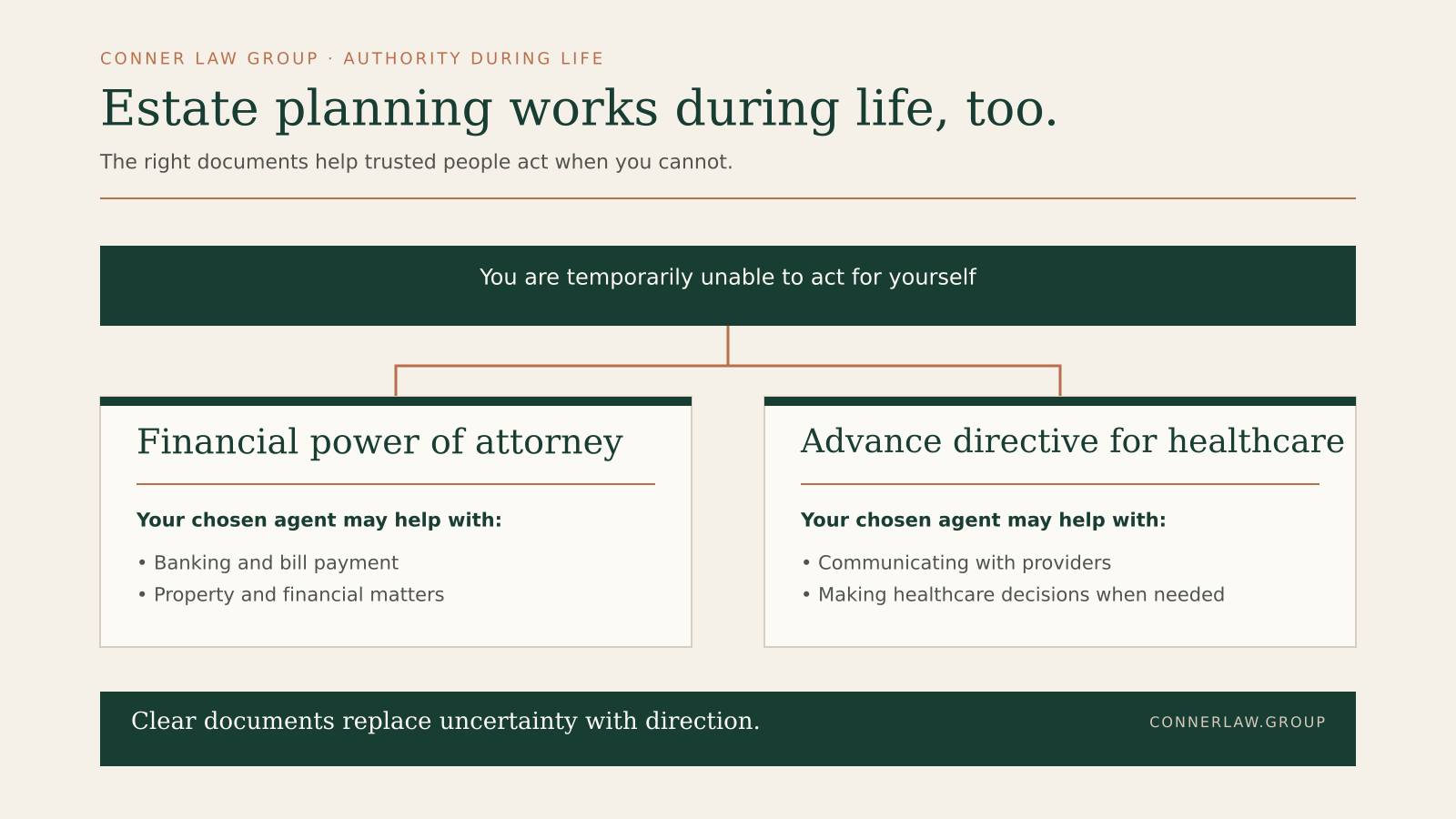
Estate planning is not only about what happens after death. The right documents can provide essential authority during life.
Without these documents, your loved ones may face delays, confusion, or even court involvement at the exact moment they are just trying to help.
That is not the time anyone wants to be asking, “Do we have the paperwork for this?”

The Questions Most Families Avoid
Many people put off estate planning because life is busy. Work is busy. Kids are busy. Aging parents may need help. The dishwasher is making a weird noise. Someone needs poster board tonight.
Legal planning rarely feels urgent until suddenly it is.
Instead of starting with every document you might need, begin with a few practical questions:
If I were unavailable for 30 days, what would my family struggle to find?
Does someone I trust know where important documents are stored?
Have I named the people I would want making financial or healthcare decisions for me?
Are my beneficiary designations current?
If I have minor children, have I documented who I would want to care for them?
If I own a business, could someone keep things moving until I returned?
The answers often reveal planning gaps that have nothing to do with wealth and everything to do with preparedness.
Estate planning is not just for people with vacation homes, complicated investments, or family portraits over fireplaces. It is for people whose families would be deeply affected if they could not access information, make decisions, or obtain the authority they need when it matters.
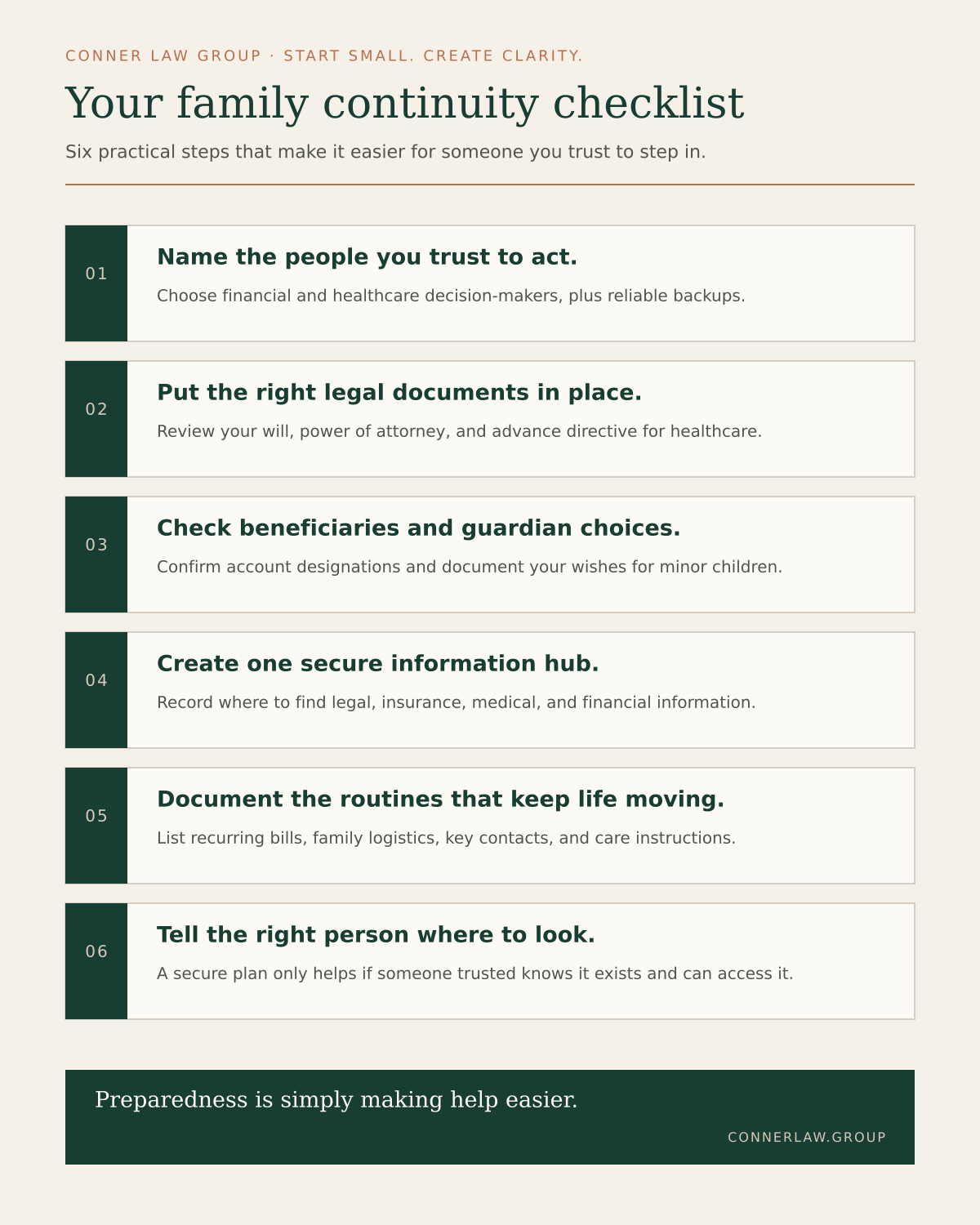
A practical continuity plan gives the people you trust the information and authority they may need to step in.
The Mental Load Nobody Talks About
Women frequently carry responsibilities that are hard to see from the outside.
They manage family logistics, appointments, school forms, caregiving, finances, medical details, emotional labor, holiday plans, and the mysterious inventory of who is currently out of socks.
That kind of knowledge has value.
Estate planning is one way to transfer not only assets, but also authority, instructions, and clarity.
A good plan helps make sure the people you love are not left guessing during an already stressful time. It gives them a roadmap. It tells them who can act, where to look, and what you wanted.
Sometimes, that is exactly what a family needs most.
A Gift Your Family Will Appreciate Long Before They Need It
The best estate plans do more than distribute property.
They create clarity.
They answer questions before those questions become emergencies.
They provide direction when emotions are high and decisions are difficult.
They allow the people you trust to spend less time digging through drawers, calling banks, or searching email inboxes—and more time caring for one another.
If you are the person who keeps everything together, creating or updating your estate plan may be one of the most practical gifts you can give your family.
Not because you expect the worst.
Because you know how much smoother everything runs when someone has a plan.
Start With a Practical Estate Planning Checkup
You do not have to organize every account, answer every question, or make every decision before speaking with an attorney. A good estate planning process helps you identify the gaps, decide who should have authority, and create a plan that fits your family.
Conner Law Group helps individuals and families throughout Georgia create and update estate plans designed to provide clarity during life and direction after death. If you are ready to review your current plan, or finally put one in place, schedule a consultation to discuss the next steps.
This article is for general informational purposes and is not legal advice. Estate planning needs and outcomes depend on each person’s circumstances.
