

Your estate plan can explain who receives your assets and who makes important decisions. But does it explain what matters most to you?
When most people think about estate planning, they think about wills, trusts, powers of attorney, and other legal documents. These documents are essential for protecting your family and establishing what should happen if you become incapacitated or pass away.
But there's another document I often encourage families to consider, particularly parents of young children and families with loved ones with special needs: a Letter of Wishes, sometimes called a Letter of Intent.
Unlike a will or trust, a letter of wishes is generally not legally binding. Instead, it provides personal guidance to the people who may one day care for your loved ones, manage your assets, or make important decisions on your family's behalf.
Think of it as an opportunity to explain not just what you want to happen, but why it matters to you.
What Is a Letter of Wishes?
A letter of wishes is a personal document that accompanies your estate plan. It allows you to communicate your preferences, values, hopes, and practical instructions to the people you've selected to carry out your wishes.
Your will might identify who should serve as your child's guardian. Your trust might establish how funds can be used for your child's health, education, and support.
But neither document necessarily explains your child's bedtime routine, the family traditions you hope will continue, or the reasons you believe a particular living arrangement would be best.
A letter of wishes helps fill those gaps.
It can also evolve as your family's needs change. Unlike formal estate planning documents, a letter of wishes can generally be revised without the same execution formalities, provided it remains a nonbinding expression of guidance rather than an attempted amendment to a will or trust.
A letter of wishes does not replace your will, trust, guardianship provisions, or other legally operative documents. It should complement those documents, not contradict them.
Letters of Wishes for Parents of Minor Children
For parents of young children, one of the most difficult parts of estate planning is deciding who should raise their children if both parents pass away.
Nominating a guardian in your will is an important first step. But consider everything a future guardian might need to know about your child.
What values do you hope to instill? How important is it that your children remain close to grandparents and extended family? Are there particular schools, traditions, activities, or religious practices you would like continued?
A letter of wishes gives you an opportunity to address these questions in your own words.
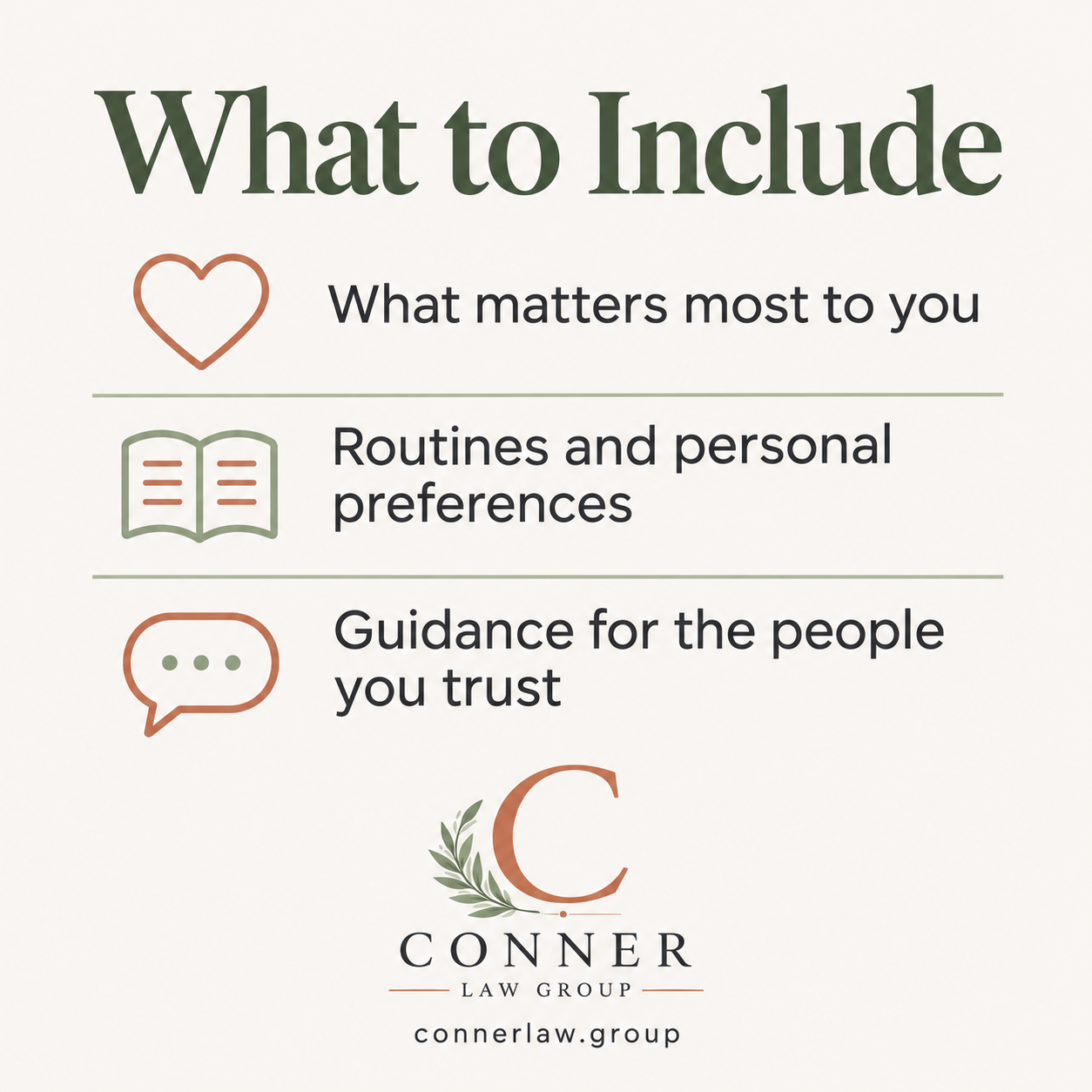
Upbringing and values: Your hopes regarding education, discipline, independence, personal values, and emotional well-being.
Family relationships: The importance of maintaining relationships with grandparents, siblings, extended family, and close friends.
Traditions and experiences: Holidays, family vacations, cultural traditions, and activities you hope your children will continue enjoying.
Your family home: Whether you would prefer the home to be maintained for your children's benefit, sold to provide financial support, or handled in another way.
Financial priorities: How you envision trust funds supporting education, extracurricular activities, travel, and other opportunities.
Personal messages: The lessons, encouragement, and hopes you want your children to carry with them.
Your letter does not need to dictate every decision. In fact, allowing flexibility for changing circumstances is often preferable.
The goal is to give the people you trust a clearer understanding of the life you hope your children will have.
Why a Letter of Wishes Is Especially Valuable in Special Needs Planning
For families caring for a loved one with disabilities or additional support needs, a letter of wishes can be one of the most valuable components of a comprehensive plan.
A properly structured special needs trust can help provide financial support while preserving eligibility for certain means-tested government benefits, such as Supplemental Security Income (SSI) and Medicaid, subject to applicable program rules.
But a trust alone cannot explain everything a future caregiver, trustee, or support professional needs to understand about your loved one.
Consider how much information you carry with you every day.
You may know which routines provide comfort, which situations cause anxiety, how your loved one communicates discomfort, and which providers understand their needs best.
You may also know the services they receive, the benefits they rely upon, and their goals for greater independence.
Much of this information may never appear in a formal legal document.
A letter of wishes or letter of intent helps preserve this knowledge when caregiving responsibilities change.
What Should a Special Needs Letter of Wishes Include?
1. Daily routines and personal preferences
Describe typical daily activities, favorite foods, important routines, communication preferences, sensory sensitivities, and anything that helps your loved one feel comfortable and supported.
Even seemingly small details can make a significant difference during a major transition.
2. Medical care and support services
Include information about physicians, therapists, medications, allergies, support professionals, medical equipment, and ongoing treatment needs.
You can also identify where important medical records, treatment plans, and other care information are maintained.
3. Government benefits and financial resources
Identify programs your loved one currently receives, such as SSI, Medicaid, waiver services, or other assistance.
Include relevant agency contacts, renewal requirements, and information about existing special needs trusts or ABLE/STABLE accounts.
Trustees should obtain appropriate guidance before making distributions that could affect benefit eligibility.
4. Education, employment, and independence
Share your loved one's strengths, interests, educational background, and future goals.
For younger children, this might include information about an Individualized Education Program (IEP), school supports, and therapies.
For adults, it might address employment opportunities, supported decision-making, community involvement, and independent living goals.
5. Housing and long-term care preferences
Explain preferred living arrangements and the support your loved one may need.
Would they prefer to remain in the family home? Live near siblings? Explore supported housing?
These preferences can help guide future conversations and decisions, even when circumstances require alternative arrangements.
6. Relationships, recreation, and quality of life
Life is about more than medical care and financial security.
Describe friendships, hobbies, favorite activities, important relationships, celebrations, and experiences that bring your loved one happiness.
A good special needs plan should focus not only on meeting basic needs, but also on preserving dignity, independence, community connections, and quality of life.
Whenever possible, the individual with special needs should participate in preparing the letter so their own preferences and goals are accurately represented.
How Does a Letter of Wishes Work With a Trust?
A trust and a letter of wishes serve different purposes.
The trust establishes legally enforceable rules and grants authority to the trustee. It may address permitted distributions, trustee succession, beneficiary rights, and how remaining assets are distributed.
The letter of wishes explains the personal considerations behind those instructions.
For example, a special needs trust may authorize the trustee to make discretionary distributions for the beneficiary's supplemental needs.
A letter of wishes might explain that the beneficiary particularly enjoys music lessons, adaptive recreation, or annual family vacations, and that maintaining access to these activities is an important family priority.
Similarly, a testamentary trust for a minor child may permit distributions for health, education, maintenance, and support.
A letter might explain that the parents particularly value higher education, involvement in the arts, or opportunities to maintain relationships with extended family.
The letter provides context, but the trustee must still act within the terms of the trust, applicable law, and any relevant public-benefit requirements.
A letter of wishes cannot authorize distributions or other actions that the trust or law prohibits.
Can You Include Wishes About Your Home or Other Property?
Yes. A letter of wishes can help explain your preferences regarding family property, particularly when emotional considerations are involved.
For example, you might explain that you hope your children can remain in the family home for a period of time, or that you would prefer the property be sold if maintaining it would create unnecessary financial pressure.
However, there is an important distinction between expressing a preference and creating a binding legal instruction.
If you want to require a particular disposition of property, that direction generally needs to be incorporated into an appropriate legally effective document, such as your will or trust.
A letter of wishes should not be used to change beneficiaries, transfer ownership, or override the legal obligations of your executor or trustee.
Is a Letter of Wishes Legally Binding?
Generally, no.
A letter of wishes is intended to provide guidance rather than impose legally enforceable obligations.
This flexibility is part of its appeal. You can share personal information and explain your priorities without attempting to anticipate every future circumstance in your formal estate planning documents.
However, a letter of wishes cannot replace:
A will identifying beneficiaries and nominating guardians
A trust establishing legally enforceable distribution provisions
A financial power of attorney
An advance directive for health care
Other legal authorizations necessary for caregiving or decision-making
If a particular instruction is essential to your estate plan, discuss it with your attorney to determine whether it belongs in a binding document instead.
How to Write Your Letter of Wishes
The good news is that a letter of wishes does not have to be complicated.
You don't need formal legal language or an elaborate document. A thoughtful letter written in your own voice is often the most meaningful approach.
Start with the people who will be receiving the letter. Explain why you're writing and what you hope the information will help them accomplish.
Then consider organizing your thoughts into sections covering your family's priorities, important relationships, care needs, financial considerations, and personal preferences.
You can write a single letter or prepare separate letters for different purposes.
For example, parents might prepare one letter for their child's guardians and another for the trustee managing their child's inheritance.
For special needs planning, a more detailed document covering daily care, support services, and long-term goals may be particularly helpful.
A Few Practical Tips
Start small. You don't have to complete everything in one sitting.
Be specific. Practical information is often more helpful than broad statements.
Allow flexibility. Preferences and circumstances will change.
Keep it accessible. Let the appropriate people know where the document can be found, while protecting sensitive personal information.
Review it regularly. An annual review, or an update after a significant life event, is a useful practice.
Coordinate with your estate plan. Make sure your letter does not conflict with your legally binding documents.
For letters containing medical details, benefit information, or other sensitive records, consider keeping them in a secure location rather than distributing them widely.
Need Help Getting Started? Download Our Letter of Wishes Resources
Writing a letter of wishes can feel overwhelming, especially when you're trying to put into words everything you would want someone else to know about your family.
You don't have to start from scratch.
At Conner Law Group, we've put together two resources to help you organize your thoughts and begin creating a letter that reflects your family's unique needs, values, and priorities.
Sample Letter of Wishes
Not sure what a completed letter might look like? Our sample provides an example of how to communicate your preferences regarding your children's upbringing, family relationships, financial priorities, and other personal considerations.
View Samples: Special Needs Planning and Minor Children
Blank Letter of Wishes Template
Prefer to work through your thoughts one question at a time? Our blank template provides prompts and space to document your wishes, including additional considerations for families with loved ones with special needs.
Download Blank Letter of Wishes Template
These resources are intended to help you communicate your personal wishes. They do not replace legally binding estate planning documents, and your letter should be coordinated with your will, trust, and other existing arrangements.
Your letter doesn't have to be perfect or completed all at once. The important thing is to begin documenting the information that could make a meaningful difference to your loved ones in the future.
Your Estate Plan Should Protect More Than Your Assets
A comprehensive estate plan is about more than deciding who inherits your property.
It's about protecting your family, preparing for unexpected circumstances, and giving the people you trust the tools they need to make thoughtful decisions.
A letter of wishes allows you to add something that legal documents alone often cannot fully capture: your voice.
For parents of young children, that might mean sharing the values and traditions you hope will shape their upbringing.
For families with special needs, it might mean preserving years of knowledge about care, routines, independence, and the experiences that make life meaningful.
And for anyone creating an estate plan, it can offer loved ones an additional source of guidance during a difficult time.
Your legal documents establish the plan. Your letter of wishes helps explain the people, priorities, and values behind it.

Let Conner Law Group Help
At Conner Law Group, we believe estate planning should reflect the needs of your family, not just the distribution of your assets.
We help families with wills, trusts, guardianship planning, special needs trusts, beneficiary coordination, and other tools designed to provide protection and peace of mind.
If you're creating or updating your estate plan, we can discuss whether a letter of wishes would be a helpful addition.
Related Reading
This article is provided for general educational purposes and does not constitute legal advice. The appropriate documents and planning strategies depend on each family's circumstances.
