
November is National Family Caregivers Month, a time to recognize the people helping loved ones navigate illness, disability, aging, and everyday life.
Caregiving can mean coordinating appointments, preparing meals, managing paperwork, providing transportation, or simply being the person who is always available. Much of that work happens quietly, alongside careers, parenting, and other responsibilities.
If someone you care about is a caregiver, you may want to help but feel unsure what to offer. You do not need to solve everything. A specific, thoughtful offer can make their week a little easier.
Replace “Let me know” with a concrete offer
“Let me know if you need anything” is kind, but it leaves the caregiver responsible for identifying a task, deciding whether to ask, and coordinating the help.
Try something more specific:
“I’m making dinner Thursday. Could I bring you a meal?”
“I’m going to the grocery store. Can I pick up your usual groceries?”
“Would it help if I handled school pickup on Tuesday?”
“Could I take care of your yard this weekend?”
“Would you like company while you work through that paperwork?”
Make it easy to accept, decline, or suggest something different.

Offer time they can actually use
A break is more helpful when the caregiver feels confident that their loved one will be comfortable and safe.
Ask what support would make time away possible. Depending on the person’s needs, that could mean spending time with their loved one, helping arrange appropriate respite care, or handling other responsibilities while the caregiver stays home.
Do not assume that anyone can step into the caregiving role. Follow the caregiver’s guidance about routines, communication, mobility, and other support needs.
And let the caregiver decide how to use the break. Rest does not have to be productive.
Listen without trying to fix everything
Caregivers may need space to talk honestly without receiving another suggestion, comparison, or reminder to “stay positive.”
Try asking:
“Would you like me to listen, help think through options, or take something off your list?”
Recognize that someone can love the person they care for and still feel exhausted, frustrated, or overwhelmed. Those feelings can exist together.
Keep including them
Caregiving can make social plans difficult. Continue inviting the caregiver, even if they often decline.
Offer flexible options: a short visit, coffee at home, a walk nearby, or a phone call that can end whenever needed. Avoid making them feel guilty about cancellations or delayed replies.
A message as simple as “Thinking of you. No need to respond” can offer connection without creating another obligation.
Help with the work behind the care
The practical work of caregiving often extends well beyond appointments and daily assistance.
With permission, you could help organize a contact list, coordinate meals, keep track of questions for an appointment, or gather documents for a professional meeting.
Respect privacy and let the caregiver and the person receiving care decide what to share. Helping does not require access to every medical or financial detail.
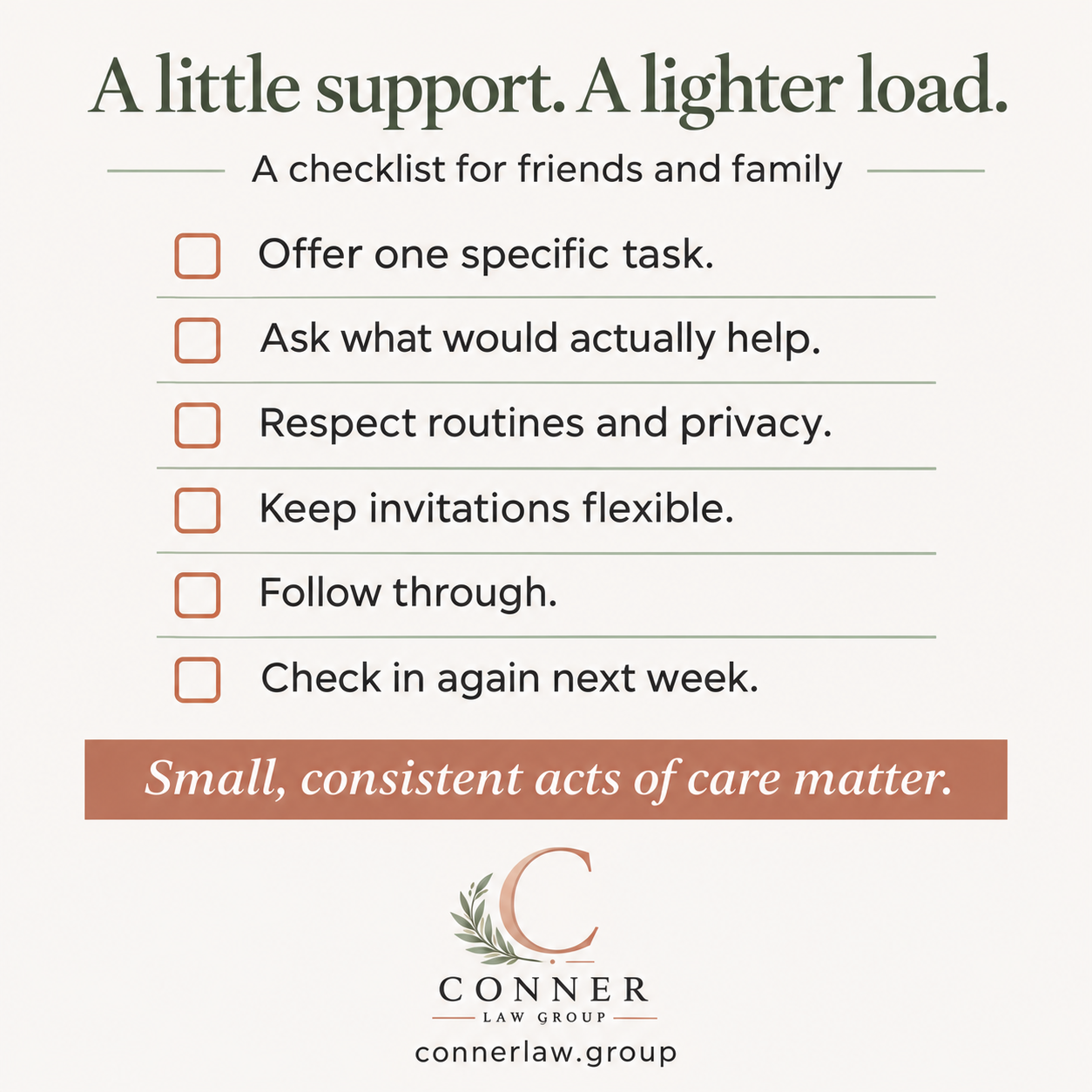
A checklist for supporting a caregiver
Choose one or two things you can reliably do:
☐ Offer a meal and ask about dietary needs and delivery preferences.
☐ Handle a specific errand, household chore, or transportation need.
☐ Ask what would make a genuine break possible.
☐ Offer companionship without expecting the caregiver to host you.
☐ Listen without judgment or unsolicited advice.
☐ Keep invitations flexible and continue including them.
☐ Ask permission before organizing help or sharing information.
☐ Remember important appointments and check in afterward.
☐ Follow through when you offer help.
☐ Check in again next week, not only during a crisis.
Help them build a backup plan
One useful question is: “What would help if you were unexpectedly unavailable?”
If the caregiver wants assistance, help them organize important contacts, routines, provider information, and instructions for a trusted backup person. Keep sensitive information secure and share it only with permission.
For families supporting a loved one with disabilities, a letter of intent can also capture preferences, daily routines, and practical information that legal documents may not address. Our guide, Special Needs Planning Is More Than a Trust: 7 Pieces of a Coordinated Plan, discusses how these pieces can work together.
Make room for the caregiver’s own planning
Caregivers often put their own needs last. Offering time or practical help so they can attend an appointment, organize their documents, or address their own planning can be meaningful support.
If they want a starting point, Conner Law Group’s guide to Three Essential Estate Planning Documents in Georgia introduces documents families may want to discuss with an attorney.
The goal is to make support available without adding pressure or another assignment.
Frequently asked questions
What is the best thing to say to a caregiver?
Try: “I’m thinking of you. Could I bring dinner Wednesday or handle an errand this weekend?” Specific offers are easier to respond to than an open-ended request to tell you what they need.
How can I help if I live far away?
Arrange a meal with permission, help coordinate willing friends or relatives, offer to research a resource they have requested, or make time for regular calls. Ask what would be useful before making arrangements.
What if the caregiver declines help?
Respect the answer. They may have privacy concerns, complicated routines, or simply prefer a different kind of support. Keep the relationship warm and offer again another time without pressure.
Does helping have to involve caregiving tasks?
No. Laundry, groceries, school pickup, household maintenance, and companionship can all reduce the caregiver’s workload without requiring you to provide direct care.
Start with one specific offer
Supporting a caregiver does not require a grand gesture. It requires noticing, asking respectfully, and following through.
This month, choose one caregiver in your life and offer one concrete thing you can do.
Conner Law Group helps Georgia families with estate planning, special needs planning, and planning for future decision-making and care. Learn more at connerlaw.group or schedule a complimentary consultation.
About the Author
Mandy Conner is the founder of Conner Law Group, a Georgia law firm assisting executors, administrators, beneficiaries, and families with probate, estate administration, and related disputes. Her background includes experience with the IRS Office of Chief Counsel.
This article provides general educational information and is not legal advice.
