
Holiday visits are often filled with familiar recipes, family stories, and catching up. They can also create an opportunity to ask a few practical questions about your parents’ wishes.
Talking to parents about estate planning does not have to mean asking about an inheritance. A helpful conversation focuses on whether they have a plan, who they trust to help, and where important information can be found.
For Georgia families, knowing those details can make an unexpected illness or death less confusing.
Start with support, not money
Choose a quiet moment rather than raising the subject in front of everyone at Thanksgiving dinner. Ask permission, and explain why you are bringing it up.
You might say:
“We’ve been reviewing our own planning, and it made me realize I wouldn’t know where to start if you needed help. Would you be comfortable telling me where you keep your important documents?”
Your parents may welcome the conversation, or they may prefer to discuss it another time. Respecting their privacy helps keep the focus on their wishes and independence.
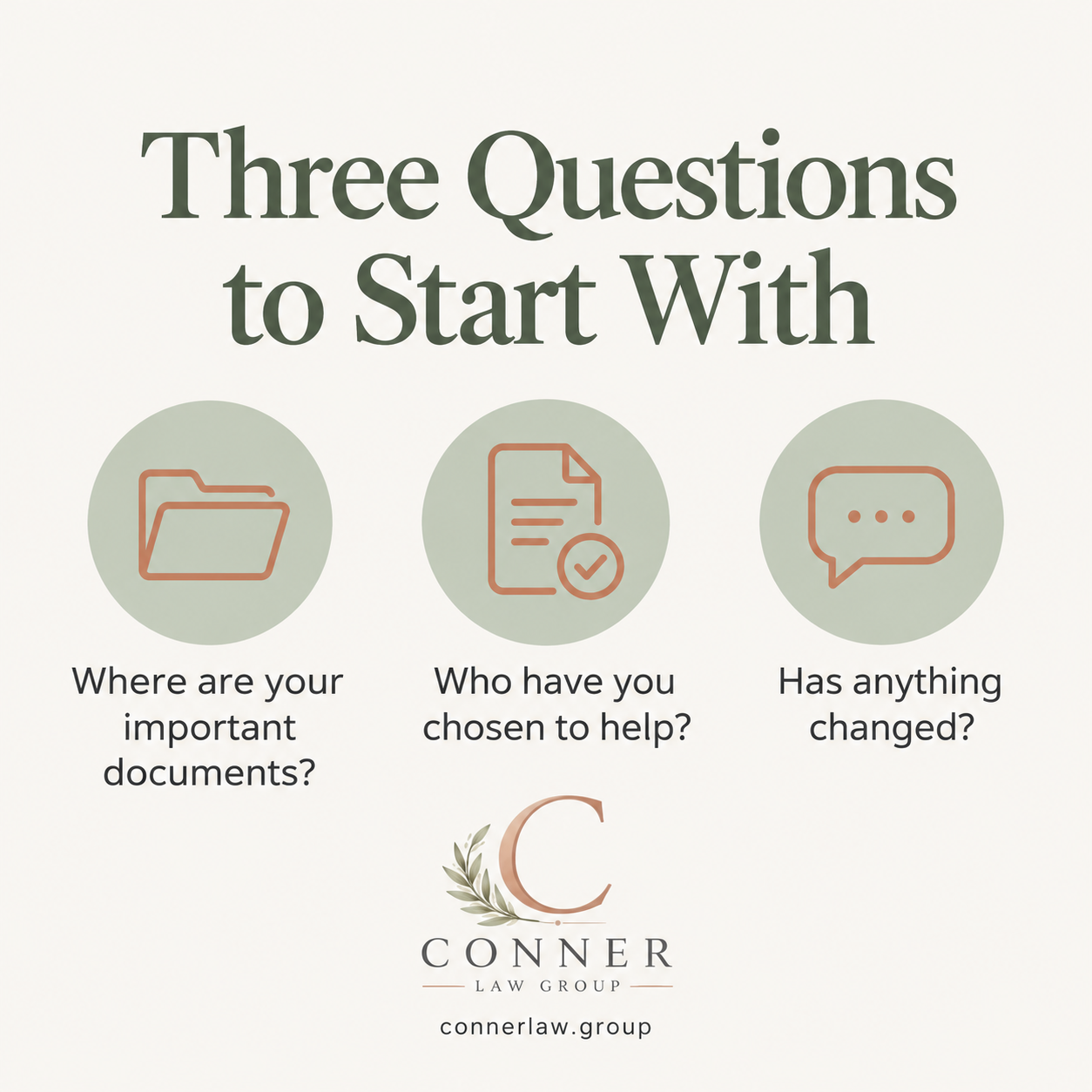
Ask whether these documents are in place
A useful starting point is whether your parents have:
A will and, if appropriate, a trust.
A financial power of attorney.
A healthcare directive and HIPAA authorization.
Current beneficiary designations on applicable accounts and insurance policies.
These documents serve different purposes. A will addresses matters after death. A financial power of attorney can authorize someone to handle specified financial matters during life. A healthcare directive addresses healthcare decision-making and treatment preferences.
For a closer look, read Estate Planning in Georgia: 3 Essential Documents Every Adult Needs.
Find out who has been chosen to help
Ask whether the people named in the documents still make sense.
Is the executor willing to serve? Can the financial agent manage the responsibilities? Does the healthcare agent understand your parent’s preferences? Are backups named if the first choice cannot help?
The goal is to identify gaps while your parents can explain what they want.
Know where to begin in an emergency
You do not need account balances or passwords to create a useful starting point. Consider asking where to find:
Original estate planning documents.
Contact information for their attorney, financial advisor, and insurance agent.
A list of financial institutions and insurance policies.
Healthcare information and emergency contacts.
Instructions for accessing important records securely.
Avoid placing sensitive account information in a family group text or an unsecured email.
Ask what has changed
An older plan may need attention after a death, divorce, move, new diagnosis, or change in family relationships.
A beneficiary’s circumstances matter, too. If a loved one receives means-tested benefits, an inheritance may need additional planning. Our guide to Special Needs Trusts in Georgia explains why the way an inheritance is left can be as important as the amount.
Frequently asked questions
Do my parents need to tell me what I will inherit?
No. A productive conversation can focus on document locations, emergency contacts, and decision-makers without discussing inheritance amounts.
Is a will enough if a parent becomes unable to manage finances?
A will does not authorize someone to manage a living person’s finances. A financial power of attorney and, where applicable, a properly funded trust can help address that concern.
What if my parents are uncomfortable discussing estate planning?
Start small. Offer to share what you have done for your own planning, and ask whether they would prefer to speak privately with an attorney. They do not have to resolve everything during one visit.

A thoughtful conversation is a useful first step
You do not need to solve every planning issue over the holidays. Knowing where to start, who to contact, and whether documents need review can be meaningful progress.
Conner Law Group helps families in Cumming, Forsyth County, Hall County, Gwinnett County, and throughout Georgia prepare and review estate plans.
Schedule a complimentary consultation to discuss your family’s next steps.
This article provides general educational information and is not legal advice. Planning needs depend on each family’s circumstances.
